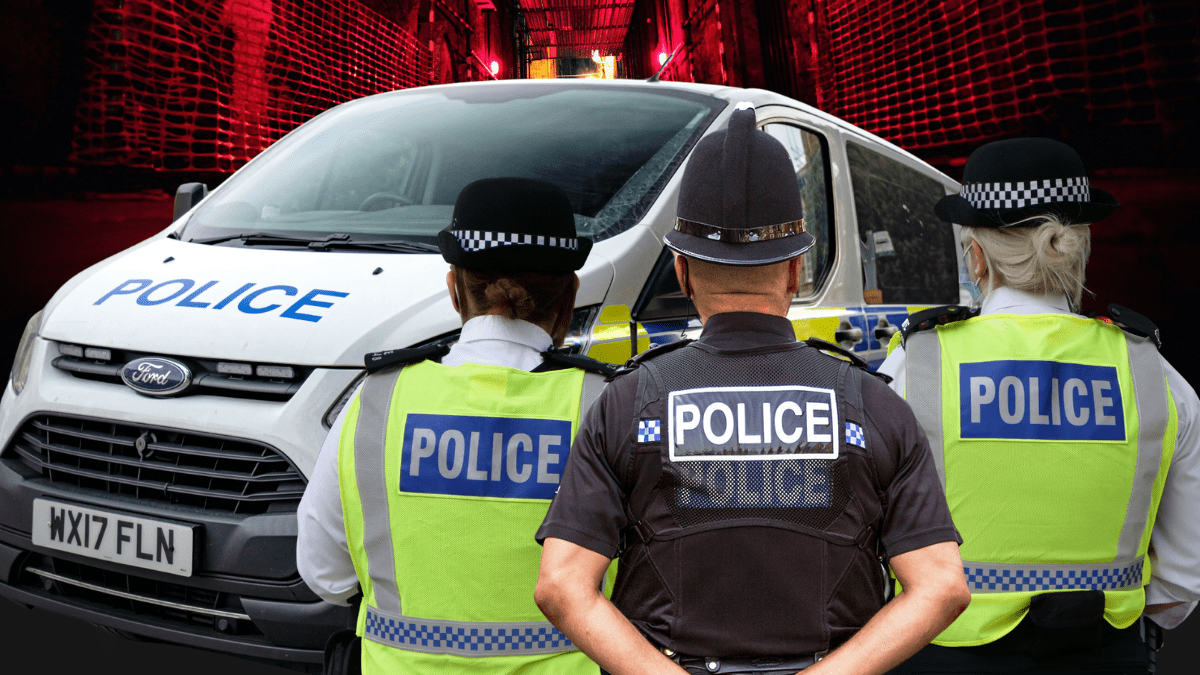
When speaking about the risks sex workers face from the police, our focus is typically on the criminalization of sex work itself. Mistreatment we face at the hands of cops, with all the indignities that interviews and arrests entail, comes second to it. A stigmatizing comment from a police officer means little in comparison to a guilty verdict. Unfortunately, the whorephobia occurring outside of the word of the law does not only show itself in offensive language used by police.
The legal system does not cease to be whorephobic to sex workers when we aren’t facing prostitution-related charges. We are impacted by it when we are victimized, when we are called upon as witnesses to crimes we are uninvolved in, and when we are accused of a crime ourselves that is not related to our sex work. How much this changes the outcome of our contact with police depends heavily on class.
Securing legal representation is one of the first hurdles everyone deals with when accused of a crime, but sex workers also have to contend with the risk that our lawyers will be whorephobic. This problem remains when we are the victims and need a lawyer to represent our interests. Whether sex workers qualify for financial legal aid/support due to low income or not, we still deal with this extra burden of having to track down a lawyer who will not give us worse representation because of our profession. Free legal advice comes with the same caveat. When money is no object, only then can you afford to pay for whichever lawyer best suits you as a sex worker.
From first contact with a cop, sex workers must be prepared to be met with bigotry and condescension. Treatment as a nuisance or as a victim will be entirely dependent on the officer, but it is rare for them to treat us as complex people rather than archetypes. Questions from the police carry a different weight and we cannot entirely avoid their prying without coming across as uncooperative, whereas we have the ability to set much firmer boundaries with friends or members of the general public.
Interviews prior to an arrest, or occurring to gather information that never results in an arrest, often take place in the custody suite of a police station. Everyone seems to be falling over themselves to present statistics that show high rates of PTSD among sex workers when campaigning to abolish the industry, yet there is a marked lack of consideration for how traumatic many of us may find it to be patted down and searched by cops prior to voluntary interviews. Could we technically refuse? Yes, but if a search is a requirement to be able to commit to the interview, it is effectively a refusal to talk which could lead to a later arrest. Being spared from this is much more likely if you’re able to pay an expensive legal firm to represent your interests and negotiate which station you’re interviewed in or how it’s conducted.
Surveillance disguised as safeguarding is also likely to be foisted on us by police who fancy themselves to be sex workers’ saviours. Answering questions about our work could lead them to unfairly decide our homes aren’t suitable for our children due to prejudices they have towards sex working parents, resulting in reports made to social services. Our mental health may be called into question over the choices we make or our reactions when we talk about traumatizing events.
Contact with police isn’t exclusively a risk to the individual sex worker involved, either. It can put an entire community at risk if our devices are seized, for those who share private information within groupchats. Investigations could be triggered where even if our colleagues are ultimately considered victims, they could be outed to their families or deported due to this discovery. For workers in “duo” chats or planning tours together, used for pairing up to see certain clients and gain safety in numbers while travelling to sell sex, those concerns increase dramatically.
Our phones and other devices are also likely to contain various amounts of porn or sexual imagery of ourselves and fellow workers. Chats sometimes include photoshoots with pictures that are not yet blurred before being added to public profiles. The average civilian could delete any nudes before handing over their phone, so they aren’t exposed to however many officers check their devices, but what if they’re spread across dozens of chats and a sex worker needs those videos and pictures for their job? Will a lawyer without a background of sex worker allyship understand how important it is to us to prioritize not handing over our phones?
A poor sex worker who is afraid of all these possible ramifications will face the choice between going without a specialist lawyer or selling additional sexual services to pay them. Weight is further added in favour of selling more sex in the short-term to afford a lawyer if a conviction would result in a fine or huge loss of income, since they’d only be stuck selling even more sex at a later date to pay it off.
With every additional step taken towards a court case, costs accrue and stress increases. Limitations might be made to their ability to travel which cuts off access to touring, social media use could be restricted so that they become isolated from sex worker community (and warnings about dangerous clients), or they could spend time in jail and lose access to already precarious housing. Being kept on remand is made more likely if a magistrate or judge believes someone will not go to their court hearing, and a sex worker with a chaotic lifestyle can quickly be argued to pose a flight risk.
Ending up in court is an uncomfortable experience no matter what end of the interaction you find yourself on. As sex workers, we will almost always be viewed as less credible witnesses than civilians, including to our own experiences. Testimony is also far more difficult to give in a state of panic, under the microscope of a system that is built to act against us. A trial in front of a jury won’t really be a judgement from group of our peers, because civilians usually do not see us as equal to them.
Last time I was in court myself, I was asked why I did not call the police immediately when I was threatened. I had not called the police at any point, did not want to interact with them, and complied the minimum amount with the case they decided to take forward without my input, only to be dragged to the witness stand so I could be accused of lying. In response, I gave the most condensed version of my honest reasoning: I do not call the police because they make things worse and I did not see the benefit in bringing what was ultimately one of the less severe altercations in my life to court.
I’ve seen how criminal cases devastate the lives of sex workers and civilians alike. Despite how cop-avoidant I am, I cannot escape their presence in my life. I don’t get to decide when they’ll harass someone on the street and bring me the moral obligation to stay close and be a witness. I have no control over whether I am reported to them or someone insists I need a welfare check. Other people can call the police at any time to report me as a victim too, leaving me to absorb the aftermath of the interaction and deal with a case they might push forward on my behalf and against my wishes.
Sex workers aren’t purely harmed by being reported to the police for offenses related to selling sex itself, but by any contact we have with them. I don’t call the police as a general rule, so I can’t fathom calling them on another sex worker. I wish more people would follow the same ethos.

