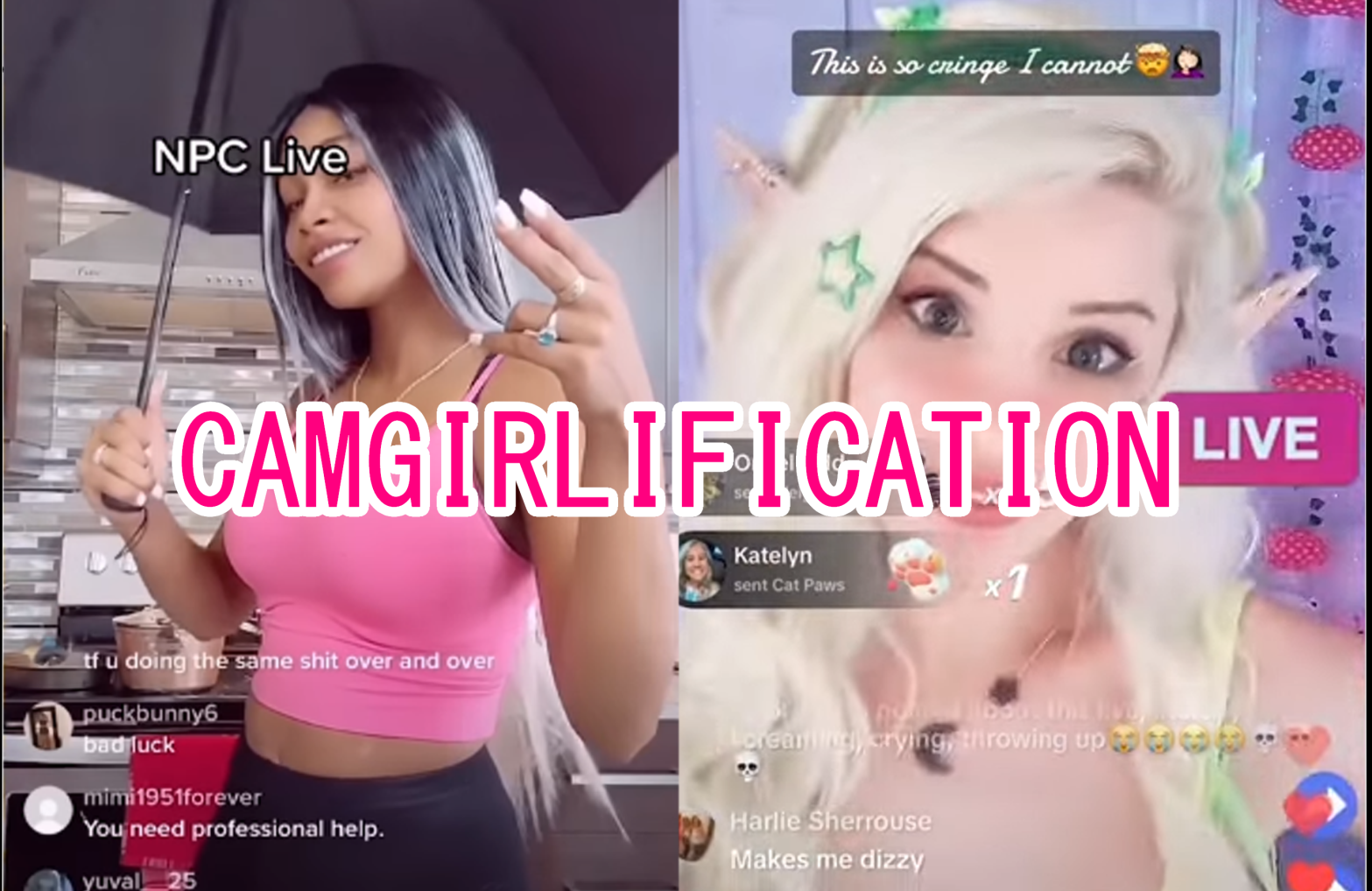
Every now and again, there will be some controversy or public obsession with a type of online content that is being used by sex workers to advertise; the kicker is that they often don’t realize it’s sex workers who are doing it and make an incomplete analysis because they’re missing that information. Particularly with online sex work and the need to advertise on platforms which are actively hostile to sex workers, some online porn creators will try to gain media attention without being explicit about telling people to go and look up their porn. The idea is that their engagement in sex work well known enough that when they get an influx of thousands of new followers, those people organically end up finding out the creator does porn later. This means that random people coming across this content and finding it bizarre are very likely to react with shock and confusion and not dig deep enough to understand the purpose.
Most recently, I have seen this happen with the rise of “NPC streaming” on TikTok. The basic premise is that the creators will stream, people will tip them, and depending on the type of tip they give the streamer will do a different action. These action range from saying a couple of words to making a strange expression to pretending to lick and ice cream. They’re innocuous actions that are family-friendly, usually performed by attractive women, and if enough tips come in at speed they’ll end up doing all of these actions in quick succession as if they’re playing a rhythm game or following the arrow dance instructions during a game of Dance Dance Revolution. They’re called NPCs because when tips aren’t coming in, they remain idle, sometimes bouncing lightly from side to side or staring into space like the idle animation for a video game character.
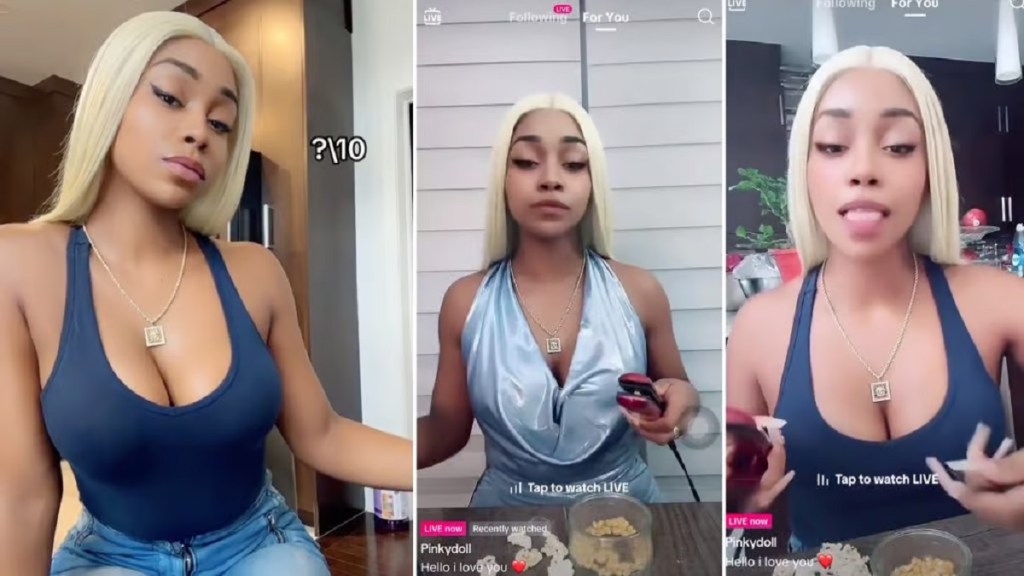
The first time I saw a clip of one of these NPC streamers, it was in a tweet talking about how weird they found the stream to be. The replies were full of comments saying that the trend was disturbing because these women were being treated as objects and branded as NPCs (which aren’t alive) and therefore we should be very concerned about the message this was sending about women. Of course, I watched the clip to see what all the fuss was about, already on edge from seeing the similarity between these criticisms and those leveled at sex workers – and I immediately saw these streams for what they were; camshows. NPC streams are camshows that aren’t sexually explicit.
One of the streamers who does this TikTok trend is Cherry Crush, an online sex worker who I recognized. I looked up others, including Pinkydoll, and found the same thing. In fact, everyone I looked up who was doing this “trend” was a sex worker. This made it clear to me that it wasn’t a widespread trend at all, but is instead a marketing technique that a few sex workers were using to build up hype and get more engagement and therefore followers on their other social media platforms. Even the “idle animation” behaviour, in between tips, is 101 camming advice: if you stay still and idle and only interact when tipped, people are more incentivised to give you money than if you’re entertaining them for free.
It’s not just that these things mimic camming, it’s that they’re often done by sex workers themselves. With a little critical thinking, this starts to make a lot of sense, because obviously people aren’t paying unknown people with 10 followers for these kinds of simple actions. The desire to pay someone for that second of attention only becomes lucrative enough if they develop a parasocial relationship with you through other content you make. In the case of porn, that connection is made more quickly, because people get a little sexual thrill out of a quick acknowledgement by a pornstar they watch.
Any assessment of this kind of streaming or content-making needs to consider how sex work is impacting the dynamic, because it changes a lot about our analysis. If you see these NPC streamers and take their streams at face-value, you could be led to the conclusion that their viewers want to control or objectify the content creators and that’s what motivates them to tip for a reaction. Of course, it isn’t simply this kind of desire for control, and instead the motivation is much more similar to paying someone through Patreon for a shout-out in a video or for their name to be included in a thank-you message. It’s about acknowledgement from someone you admire, or like, or have a parasocial relationship with.
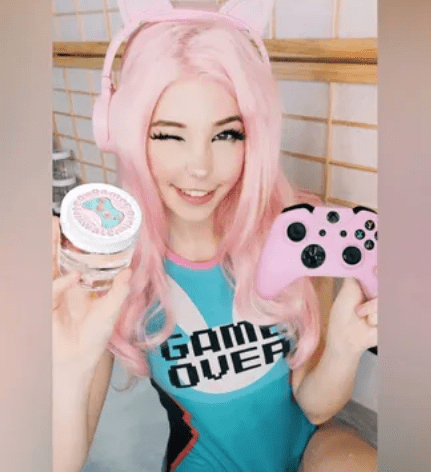
This recent TikTok phenomena is far from the first to result in this sort of widespread public confusion. There was controversy when Belle Delphine sold “gamer girl bathwater”, full of willful misunderstanding about people’s motivations for buying it. When Ava Louise licked a toilet seat on a plane to have a viral moment, she did so because it brought her attention to promote her online sex work, but newspapers were writing about it as her completing a challenge and acting as though they couldn’t fathom why someone would do it. The advertising efforts of sex workers are treated as some deviance on their part instead of a calculated business choice.
Outside of these particular activities that people focus on, there is also the common criticism of women and queer people who make a living on streaming platforms. It’s true that many of them use techniques to earn money that were pioneered by cam models whose shows were a lot more sexual. Many popular camsites predate the platforms that non-sexual streams are permitted on now, and given that even online sex work is a stigmatized profession which attracted people who are struggling for money enough to push past that stigma to engage in it anyway, cam models often employ every possible trick to squeeze a little more money out of their clients.
Having a menu of things someone can tip to get, personally thanking every tipper, flirting with people in the chat, and setting goals where the streamer will do something special once hitting them – they’re all part of this sort of camgirlification of streaming. Whether the people doing these things on the platform are sex workers themselves or not, it’s clear to me that when there are tipping goals for outfit changes and reveals or people like Finnster setting goals for “girl month” to stay presenting femininely, it’s clear to me that these business models are built from those used in camming. When it comes to the very popular streamers, I find it highly unlikely that they aren’t aware of this – and some of them make it clear they are, like Finnster taking photos with Belle Delphine to post online and increase his audience. However, admitting this is often a significant risk to some of these streamers careers, when the platforms themselves explicitly don’t permit sex work.

Getting tipped on twitch to change into a themed outfit isn’t against their rules. If that outfit happens to be skimpier than the one you started the stream in, so what? However, the second you admit that the chat is paying you to wear less clothing, you’re likely to have the platform crack down on your channel and you risk being removed or restricted. There’s a fine line that creators have to tread. When someone who streams on a platform that is not made for sex work is also a sex worker, they often have to take great care not to discuss it at all or openly drive traffic there.
Ultimately, all of this means that various other types of streaming pick up the aesthetics of cam modelling and online porn streaming, but do not and cannot acknowledge that fact.
I’m not angry at the streamers who do this, not least because many of them are sex workers themselves who came by the knowledge they have by personally using these camsites, but I am frustrated that the broader public fails to recognize what is so obvious to the sex workers seeing this unfold. For the average person, camming is synonymous with someone masturbating on screen and with nudity, so all of the marketing work that goes into it and the planning that goes into the tip goals for the shows is forgotten about and dismissed. If a streamer is keeping their clothes on, the connection isn’t made, and the only time sex workers are mentioned in this context is to suggest that female streamers don’t deserve the audience they’ve gained and only got it by being attractive and wearing a low-cut top… as if creating a streaming (or camming) personality and encouraging this connection with viewer is somehow easy because a streamer has large boobs.
The more porn sites are restricted, as Pornhub has been from many states and as the UK and France and Canada and various other countries have tried to do with different bills, the more sex workers will have a harder time advertising or getting new viewers through the porn sites themselves and more of us will have to branch out to social media sites which are not built for us and have strict rules about us mentioning our profession. These kinds of public reactions to this advertising, treating viral marketing as if it is sincere bizarre behaviour on the part of the creators, will only increase in frequency.
Camgirlification incoming.
 Jack Talks About Sex Work